

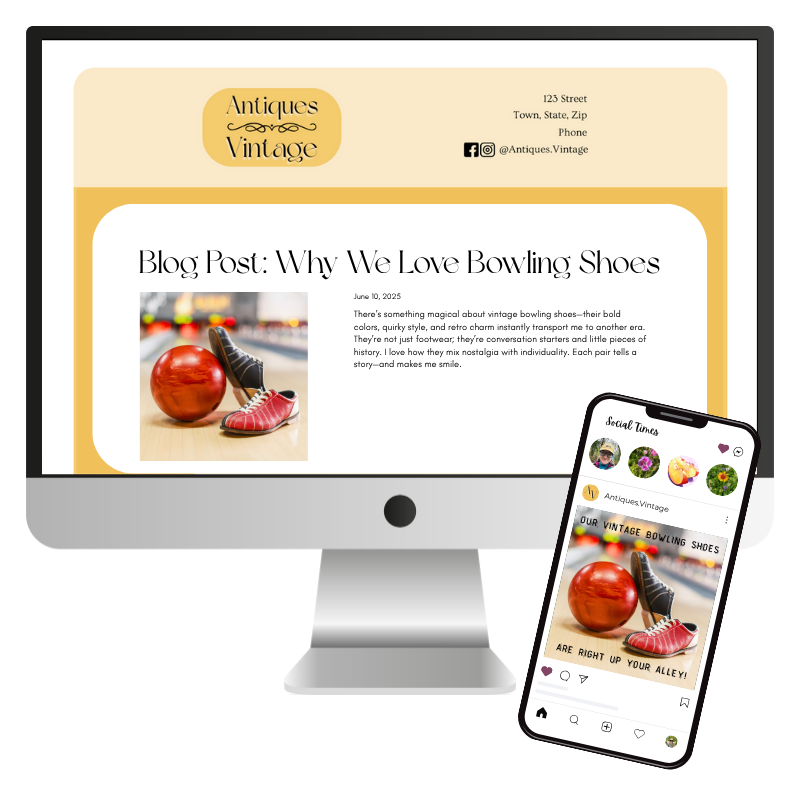
As a small business owner, you’ve probably received a lot of advice about where to invest your limited marketing resources. Some swear by social media due to its reach and engagement potential (and the fact that it’s mostly free), while others insist that a professional website is the way to go.
My opinion is that treating this as an either-or decision is like asking whether your business needs a phone number or an address. In reality, you need both working together.
Here’s why…
They Serve Different Purposes in Your Customer’s Journey to Your Door.
Social media is where you:
- Share timely and fun content, like the raccoon on the back deck or your spontaneous decision to run a sale on dinosaur socks for National Dinosaur Day.
- Start conversations about topics that matter to your audience. For example, in early 2025, when federal funding was being cut for public land management, Skagit Trail Builders helped create awareness by re-posting articles from affected partner organizations.
- Build community around shared interests. Does your shop sell vintage bowling shoes? Social media helps you find your bowling shoe soulmates!
- Stay top-of-mind. Posting regularly and meaningfully helps keep your business or organization in people’s awareness, even if they aren’t engaging with you directly.
- Drive traffic to your website. (BTW, this is the most important one!)

Your website is where you:
- Provide more detailed information. Share hours, location, contact details, a portfolio of projects or products, and your organization’s story. This kind of information also supports search engine (SEO) and google map results, so visitors from afar can find your business while they are traveling through your community.
- Establish credibility. Showcase your certifications, community involvement, and in-depth articles about topics that matter to your clients.
- Support revenue creation. Even if you don’t operate an e-commerce site, you are facilitating revenue generation by guiding clients and customers to your location.
Think of social media as a international convention for fans of vintage bowling shoes. You might meet potential customers at the networking event and hand out your business card, but you’ll conduct the serious business of selling vintage bowling shoes back at the shop. Your website helps them learn more about you and make the decision to open your shop door.

Social Media Gets You Discovered. Websites Create Customers.
Social media platforms are designed for discovery. People scroll through Facebook, Instagram, or TikTok and stumble across products and businesses they never knew existed (it’s the reason I have a brand new pair of pink Birkenstocks and more ear piercings than my mom approves of, but my daughter and I think they’re pretty rad).
The algorithm can place your content in front of exactly the right audience at precisely the right moment. However, social media platforms aren’t designed for sales; they’re meant to keep people on the platform scrolling…scrolling…scrolling…um, still scrolling.
Your website is designed for action. It’s where people follow up on their interest in you. For example, they can get directions, book appointments, download resources, or access more detailed information. Without a website, the awareness you build with your social media presence doesn’t have a place for potential customers to do more research.
Social Media is Rented. You Own Your Website.
Sorry to be a downer, but you need to understand this harsh reality: you’re renting space on social media platforms, not owning it. Facebook could change its algorithm tomorrow and diminish your organic reach. Instagram could suspend your account over a misunderstood post. TikTok could be banned entirely. These platforms control how, when, and if your content reaches your audience.
Your website is digital real estate that you actually own. No algorithm can hide your content from people who want to find you. No platform can suspend your domain name because they don’t like your latest post. While social media platforms come and go, your website remains a stable home base for your business.
Different Audiences. Different Behaviors.
Your customers aren’t all using the same platforms or looking for information in the same way. Your Facebook followers are, very likely, different from your Instagram audience, and both groups behave differently when they visit your website.
Some people prefer to research thoroughly on your website before making a purchase, while others like to engage with your brand on social media before they’re ready to buy. Some customers want to browse your full product catalog online, while others prefer to see behind-the-scenes content on your social channels.
By maintaining both presences, you’re meeting customers where they are and how they prefer to interact with your business.
Social Media Builds Relationships. Websites Build Trust.
Social media is inherently social. It’s where you show personality, respond to comments, and build genuine relationships with your community. This human connection is invaluable for small businesses competing against larger competitors.
Your website, however, is where you demonstrate expertise and authority. It’s where you share case studies, service descriptions, and professional testimonials. While social media might convince someone you’re cool and likable (which you totally are), your website assures them you’re competent, trustworthy, and worth their time.
The Magic of Strategy!
The real magic happens when your website and social media work together strategically. Your social media drives traffic to your website, and your website provides content for your social channels. You can repurpose blog posts into social media content, turn customer testimonials into Instagram stories, and use website analytics to inform your social media strategy.
Each platform strengthens the other. Your social media builds awareness and engagement, while your website generates potential customers and drives revenue. Together, they create a comprehensive digital presence that’s far more effective than either platform alone.

Manage Your Time to Make It Work for Your Business.
You don’t need to post constantly to make this approach effective. First, ensure your website covers the basics: clear information about your services, contact details, and a way for people to take action. Then start posting to your social media. Just a post or two per week will build your audience and drive visits to your website.
The key is consistency and clarity across platforms. Make sure your social media profiles link to your website, and ensure your website makes it easy to find and follow your social accounts. Create a content strategy that serves both platforms without duplicating effort.
Your small business deserves every advantage in today’s competitive marketplace. A website and social media presence aren’t competing investments – they’re complementary tools that work best when used together. Stop thinking about whether you need one or the other and start thinking about how they can collaborate to grow your business.
Need help setting up your website?
Call, email, or set up a chat with me. I can help!
Claude and EditGPT were utilized to outline and suggest edits to this blog post. View the AI Policy I wrote for Skagit Trail Builders to learn more about my process..
Let’s connect on social!


